
From Staffing to Success: HR Planning Strategies for Modern Healthcare Organizations
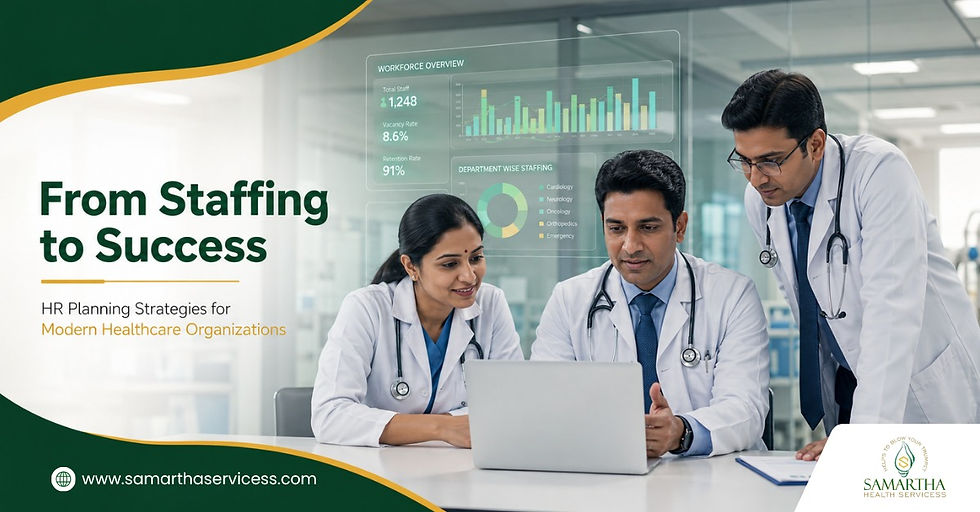
The healthcare industry is experiencing unprecedented workforce challenges. Rising patient demand, an aging population, digital transformation, and persistent staff shortages are placing immense pressure on healthcare providers worldwide. According to industry reports, healthcare organizations continue to face difficulties attracting, retaining, and developing qualified professionals while maintaining high standards of patient care.
For many years, human resources in healthcare focused primarily on recruitment, scheduling, payroll, and compliance. Today, that approach is no longer sufficient. Modern healthcare organizations require comprehensive Healthcare Workforce Planning and Strategic HR Planning for Healthcare to build resilient, agile and high-performing teams.
Organizations like Samartha Health Services recognize that proactive workforce planning is essential for improving patient outcomes, reducing burnout, strengthening employee engagement and achieving long-term operational success.
Key Workforce Challenges in Modern Healthcare
Before implementing workforce strategies, healthcare leaders must understand the challenges shaping today's workforce environment:
Ongoing healthcare staff shortages
Rising employee burnout and turnover
Growing demand for specialized clinical skills
Workforce aging and succession planning concerns
Increasing compliance and regulatory requirements
Rapid adoption of healthcare technology and AI tools
Addressing these challenges requires a strategic and future-focused HR approach. Forward-thinking organizations such as Samartha Health Services are increasingly investing in workforce planning initiatives to navigate these evolving demands.
A 5-Step Healthcare Workforce Planning Framework
Successful healthcare workforce planning follows a structured approach:
Step | Action |
Assess | Evaluate current workforce capabilities, staffing levels, and skill gaps. |
Forecast | Predict future workforce needs based on patient demand and organizational growth. |
Identify Gaps | Determine shortages in skills, leadership, and specialized roles. |
Develop Talent | Invest in training, mentorship, and career development programs. |
Measure | Monitor workforce performance, retention, and engagement metrics. |
This framework helps healthcare organizations align workforce capabilities with long-term business objectives.
1. Move Towards Skills-Focused Workforce Planning
Historically, healthcare recruitment and scheduling relied heavily on job titles and certifications. However, telemedicine, digital health platforms and AI-assisted care models are changing how healthcare teams operate.
The Strategy
Forward-thinking healthcare organizations are adopting skills-focused workforce planning. Rather than focusing solely on job titles, they identify the competencies and capabilities required for delivering quality care.
By mapping workforce skills, healthcare organizations can:
Improve scheduling flexibility
Optimize resource allocation
Address emerging skill shortages
Support workforce mobility across departments
For example, a hospital may identify nurses with telehealth experience and deploy them more effectively during periods of increased virtual consultation demand.
2. Transition from Benefits Expansion to Intentional Wellness Design
Burnout has become one of the biggest threats to healthcare workforce stability. High turnover not only increases recruitment costs but can also impact patient care quality and staff morale.
Many healthcare organizations have responded by adding wellness programs and employee assistance resources. However, disconnected initiatives often fail to deliver meaningful results.
The Strategy
Successful HR Planning Strategies for Healthcare Organizations treat employee well-being as a core operational priority.
Healthcare leaders should focus on:
Workflow Optimization
Review and redesign workflows to reduce unnecessary administrative tasks and documentation burdens, allowing clinicians to spend more time with patients.
Flexible Scheduling
Many hospitals are adopting self-scheduling platforms that allow nurses and healthcare professionals greater control over shifts, reducing scheduling conflicts and improving job satisfaction.
Mental Health Measurement
Move beyond tracking program participation and monitor actual outcomes through:
Employee engagement surveys
Burnout assessments
Retention rates
Absenteeism trends
Organizations that actively measure workforce wellness are better equipped to address emerging issues before they impact patient care.
3. Co-Create Responsible AI and Technology Governance
Artificial intelligence is transforming healthcare workforce management. From predictive staffing models to automated recruitment systems, AI can help healthcare organizations improve efficiency and address labor shortages.
However, healthcare remains a highly regulated environment where human oversight is essential.
The Strategy
HR leaders should play an active role in governing technology adoption.
Strategic Focus | Objective | Operational Approach |
Mitigating Bias | Promote fair and compliant hiring practices. | Conduct regular bias audits and maintain human oversight in AI-assisted hiring decisions. |
Workflow Alignment | Balance human expertise with automation. | Train managers to lead technology-enabled healthcare teams effectively. |
Predictive Analytics | Improve workforce forecasting. | Combine patient demand data, demographic trends, and workforce analytics to anticipate staffing needs. |
Organizations such as Samartha Health Services can leverage these technologies responsibly while maintaining patient-centric care and workforce transparency.
4. Foster a Culture of Continuous Internal Mobility and Up-Skilling
In today's competitive hiring environment, relying solely on external recruitment is expensive and often unsustainable.
One of the most effective Healthcare Talent Management strategies is developing existing employees.
The Strategy
Healthcare organizations should establish clear career pathways and ongoing learning opportunities.
This may include:
Clinical specialization programs
Leadership development initiatives
Internal mentorship programs
Partnerships with nursing and medical schools
Sponsored certification and training opportunities
Benefits of Internal Mobility
Organizations that invest in employee development often experience:
Higher employee engagement
Improved retention rates
Reduced recruitment costs
Stronger succession planning
Faster leadership development
By helping employees grow within the organization, healthcare providers create a more stable and motivated workforce. This approach has become a key component of workforce success for organizations such as Samartha Health Services.
Essential Healthcare HR Metrics to Monitor
Effective Healthcare Workforce Management requires ongoing measurement and optimization.
Metric | Why It Matters |
Employee Turnover Rate | Measures workforce stability and retention. |
Time-to-Hire | Evaluates recruitment efficiency. |
Employee Engagement Score | Indicates workforce satisfaction and morale. |
Vacancy Rate | Highlights staffing shortages. |
Internal Promotion Rate | Measures talent development effectiveness. |
Burnout Indicators | Helps identify workforce well-being concerns. |
Monitoring these metrics allows HR leaders to make data-driven decisions and continuously improve workforce performance.
The Blueprint for Sustainable Care
In modern healthcare, organizational success depends on workforce success. Healthcare providers can no longer view staffing as simply filling vacant positions. Instead, they must build a dynamic workforce strategy focused on talent development, employee well-being, workforce agility, and technological readiness.
By embracing Healthcare Workforce Planning, investing in employee wellness, promoting internal mobility, and implementing responsible AI governance, healthcare organizations can create stronger teams, improve patient outcomes, and remain resilient in an increasingly competitive healthcare landscape.
Healthcare organizations that invest in strategic workforce planning today will be better positioned to deliver exceptional patient care, reduce staffing challenges, improve employee satisfaction, and achieve long-term operational excellence. Industry leaders like Samartha Health Services understand that workforce planning is not just an HR function it is a critical driver of organizational success.
Ready to Build a Future-Ready Healthcare Workforce?
Whether your organization is focused on reducing burnout, improving staff retention, strengthening succession planning, or optimizing workforce performance, strategic HR planning is the foundation for long-term success.
What workforce planning challenge is your healthcare organization facing today? Share your thoughts in the comments or connect with us to discuss effective healthcare staffing and talent management strategies.


